You have 16 A at the cabin
16 A gives less than 4 kW, which is only enough for a basin. In that case we recommend a small 10 A under-counter tank.
Should you keep your hot water tank or choose a flow-through heater? Compare them in the table, then read when we recommend keeping a tank.
A conventional tank stores around 200 litres of hot water. COAX heats water as you use it. Each has different requirements for the power supply and installation location.
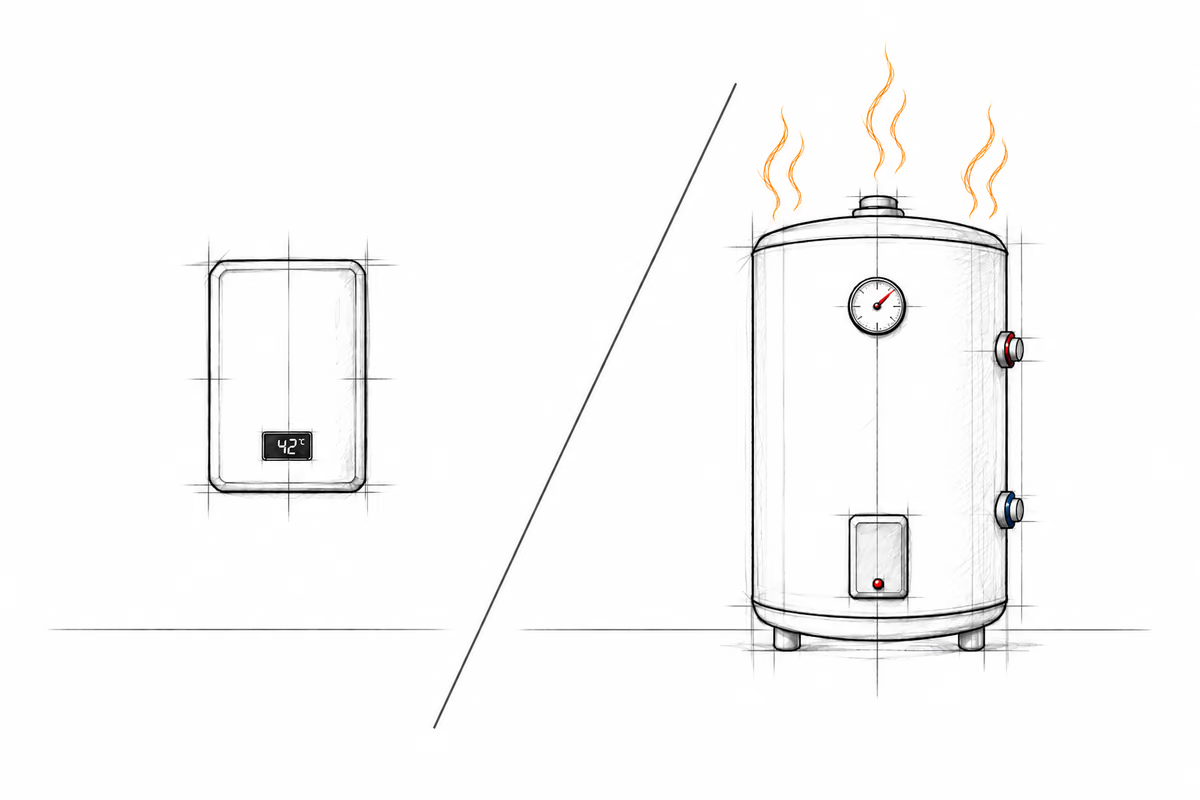
Eighteen differences, from power and space to noise and frost.
| Point | Hot water tank | COAX |
|---|---|---|
| Type of solution | Storage in a tank, water kept hot around the clock | Direct flow-through heating, active only while you draw water |
| Electricity use | Continuous heat loss (standby loss) | No standby loss, uses electricity only in the minutes you draw hot water |
| Space required | Typically 60x60x120 cm, requiring a utility room or storage cupboard | 9x38x26 cm, can be fitted close to the outlet |
| Hygiene | Risk of bacterial growth in standing water | Water straight from the mains, with no storage in a tank |
| Capacity | Limited to the tank volume, runs out under heavy use | Unlimited hot water, for as long as the tap is open |
| Maintenance | Needs regular anode checks, cleaning and draining | Maintenance-free, with no moving parts |
| Service life | Insurers recommend replacement after 10–15 years, and leaks become more likely with age | Stainless steel heating chamber, with no anode |
| Installation | Needs a floor drain and a safety valve, often with long pipe runs | Simple installation, small unit, short pipes, no drain needed |
| System and pipework | Centralised, long pipes mean greater heat loss and more waiting | Decentralised, heat only where it is needed, almost no waiting |
| Frost protection (cabins) | Must be drained or kept in a heated room, with a risk of frost damage | Minimal frost risk, very small water volume, easy to drain |
| Environmental impact | Higher energy use and more water wasted while you wait | More environmentally friendly, low electricity consumption and less cold water wasted |
| Pressure and flow rate | Good pressure, but a limited water supply | Stable pressure and a good flow rate, with no pressure drop when several outlets are in use |
| Water-saving fixtures | Long waiting times make water-saving nozzles impractical, reduce comfort and waste more cold water | Hot water arrives quickly, so you can use efficient water-saving fixtures without reducing comfort |
| Energy loss in pipes | Large losses over long pipe runs from a central tank to the outlet | Almost no losses, short pipes and local heating |
| Scalability | One large unit that must be sized for peak demand | Modular: several small units can be installed at different outlets |
| Noise | Can produce clicking sounds and expansion noise as water heats | Near-silent operation, no large body of water being heated |
| Comfort at the tap | Waiting time at the tap, a burst of cold water before the hot arrives | Fast response time, fewer temperature swings |
| Safety | Risk of leaks or tank failure | No storage tank that can rust through or crack |
In these situations we recommend keeping or buying a tank.
16 A gives less than 4 kW, which is only enough for a basin. In that case we recommend a small 10 A under-counter tank.
A 15 to 18 kW shower heater needs a three-phase supply and a 32 to 45 A circuit. If that requires upgrading the supply, keeping the tank until your next renovation is often more economical.
A modern, well-insulated tank standing in a room you heat anyway loses little. Wait until it needs replacing, or until the bathroom is due for a refurbishment.
Several shower heads running at once require multiple heaters connected in parallel. That requires a 400 V supply and a sufficiently high main fuse rating. If you do not have that, a large tank is simpler.
You avoid the tank's heat loss. Your electricity price and hot water use determine how much that saves in kroner.