How it works
The heating element switches on when water starts flowing and off when you turn off the tap. Power output and flow rate determine the temperature rise.
How the water is heated
A conventional water heater keeps stored water hot between uses. In a Coax flow-through heater, the water is heated as it runs through the appliance.
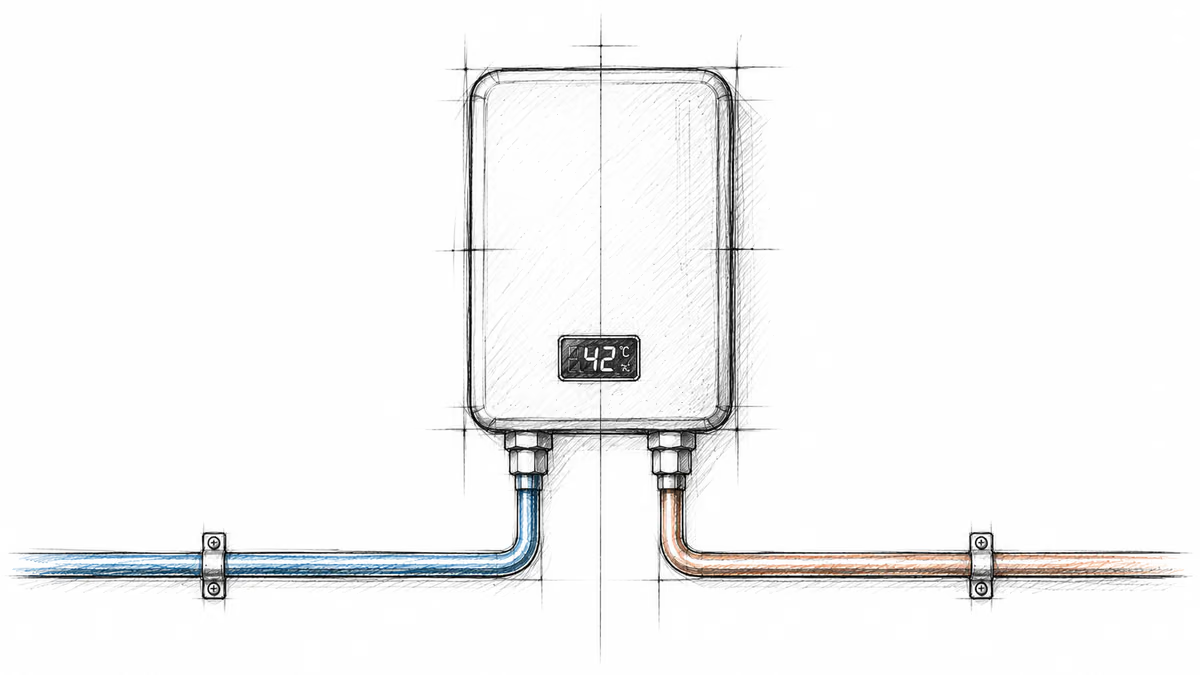
Power output determines the temperature rise at a given flow rate. The thermostat adjusts the heating continuously to keep the tap temperature stable, whether you are filling a glass or taking a long shower.
This is where the numbers puzzle many people: a flow-through heater draws more power than a conventional water heater while the water is running. But power output (kW) is not consumption (kWh). The tank uses electricity around the clock to keep the water warm, while Coax uses electricity only in the minutes you actually draw hot water. With up to 98 % efficiency and no heat loss from a tank, that means lower overall electricity consumption for the vast majority.
From kilowatts to litres
Power output determines how much water the heater can heat per minute. The colder the incoming water, the fewer litres it can heat to the required temperature.
| Power output | Winter | Summer | Suitable for |
|---|---|---|---|
| 5.5 kW | approx. 2.5 | approx. 2.8 | Washbasin, kitchen tap |
| 9 kW | approx. 4 | approx. 4.6 | Kitchen and a basic cabin shower |
| 15 kW | approx. 6.7 | approx. 7.7 | Shower in a home, our best-selling size |
| 18 kW | approx. 8 | approx. 9.2 | A comfortable shower |
| 24 kW | approx. 10.7 | approx. 12.3 | Shower and kitchen at the same time |
Flow rate in litres per minute at a tap temperature of 40 °C. Calculated with incoming water at 8 °C in winter and 12 °C in summer.
A COAX does not necessarily use 21 kW for a hand basin. The thermostat matches the power output to the flow rate: at 3 to 4 litres per minute the heater draws around 5 kW, while a full shower may call for maximum power output. How much it uses depends on how many degrees the water has to be heated.
That is why we ask you to measure your shower's flow rate before choosing a model. All you need is a ten-litre bucket and a stopwatch.
SourceRørhåndboka, Rørhåndboka, opens in a new tab
Start the bucket methodAnd what happens to the fuse?
COAX starts smoothly and increases its power output continuously. It is a purely resistive load, like a panel heater, with no inrush current. The heater needs a dedicated circuit, a fixed connection installed by an electrician and a residual current device. In Norway, a fixed connection is required for water heating appliances above 1.5 kW.
SourceNEK 400, Norsk Elektroteknisk Komite, opens in a new tab
Built layer by layer
Nickel-chromium heating element
The nickel-chromium tubular heating element transfers heat quickly and evenly, with a long service life even under frequent use.
Heat-conducting magnesium powder
Insulating magnesium powder transfers heat efficiently from the element to the water while keeping the electrical components isolated from the water.
Stainless steel heating tube
The tube withstands high temperatures and pressure.
Stainless steel water channel
A corrosion-resistant channel that keeps the water fresh and hygienic.
Aluminium-magnesium alloy casting
A lightweight, robust outer structure that protects the components and makes installation easier.
The layers conduct heat to the water and protect the components. The design reduces the risk of dry firing and makes maintenance simpler.
Safety at every stage
Full electrical isolation from the water
The heating circuit is enclosed in insulating material that keeps the water separate from the electrical components.
Earth leakage protection
Cuts the power immediately if a fault occurs in the installation.
Scald protection
An automatic thermostat with direct temperature setting keeps the water temperature constant.
Overpressure and overheating protection
A thermal cut-out switches off the power if the temperature or pressure becomes abnormal.
IP25 waterproof
Splash-proof, corrosion-resistant front cover built for Norwegian bathrooms.
Multi-layer heating chamber
A long circulating water channel prevents limescale build-up and gives a long service life.
Operating information on the LED display
Shows the operating status, inlet and outlet temperatures, and water and electricity consumption.
Automatic fault detection
If a fault occurs, the cause is shown automatically on the display.
Certified to the EN 60335 series, the safety standard for household appliances and flow-through heaters.
Want to know which model suits your needs?