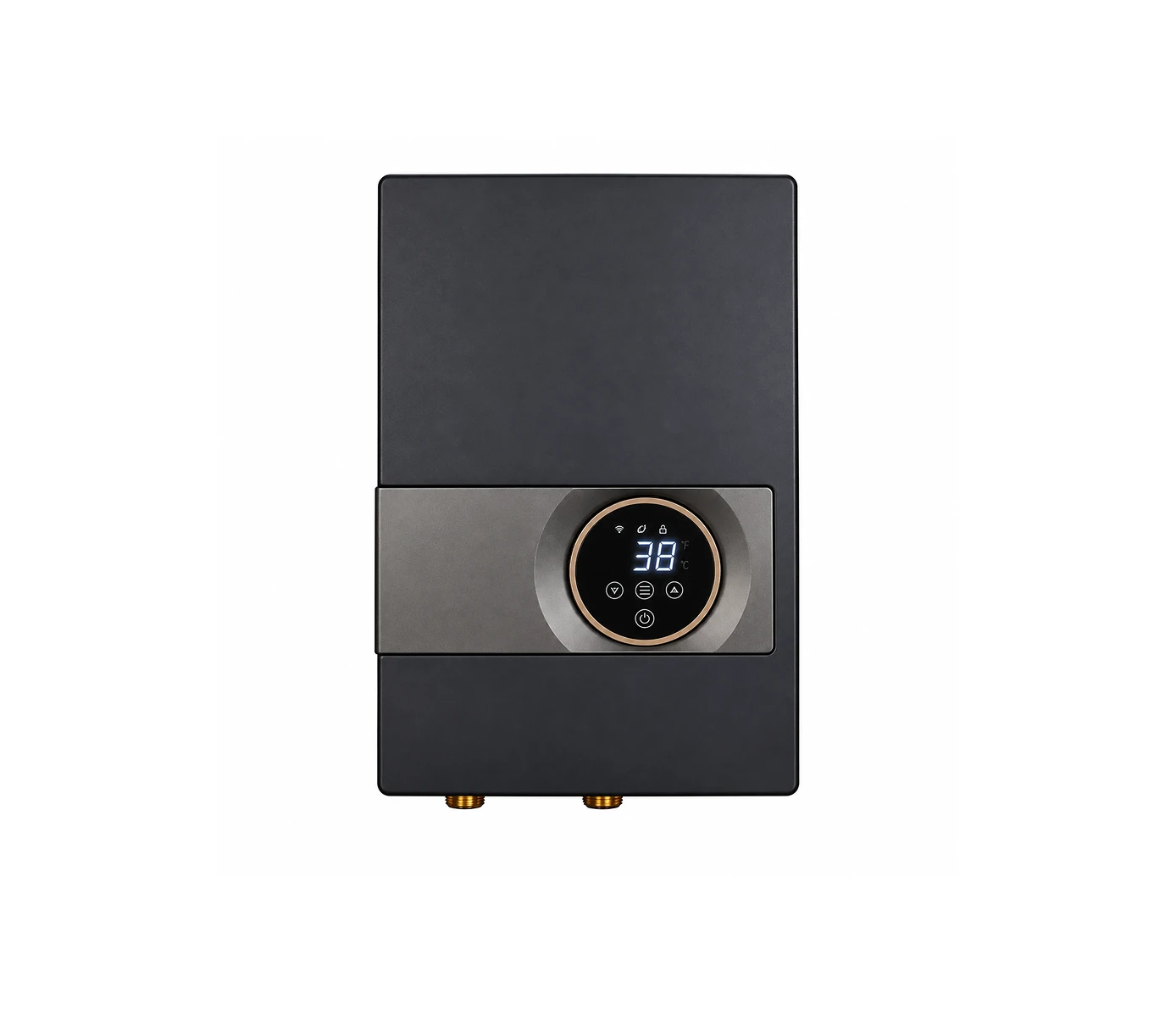
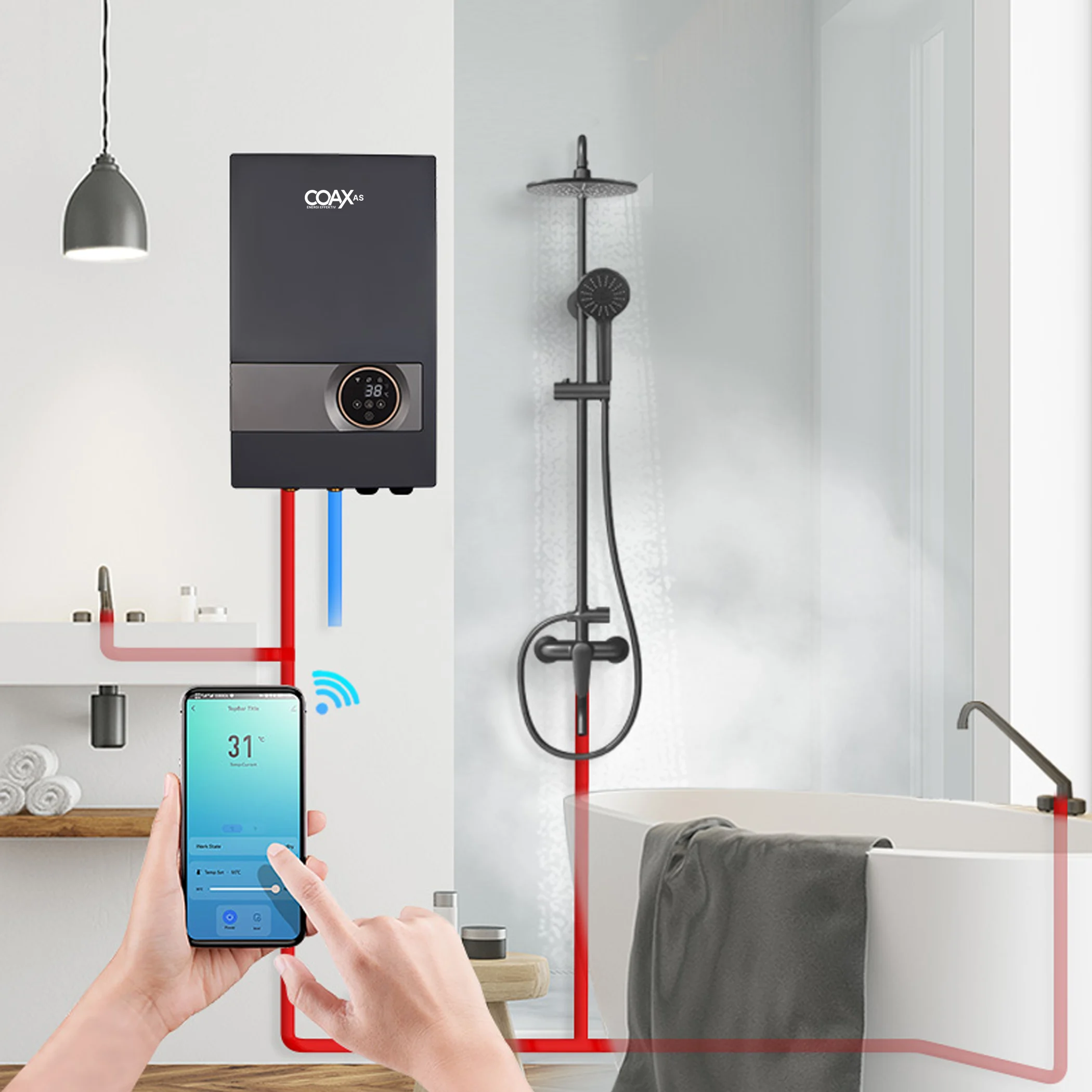
JNE-1
- Hot water after around five seconds, and it does not run out
- Holds the temperature within one degree of what you set
- Four power output levels from 7 to 13,5 kW
- Water and electricity physically separated, IP25 and safe in wet rooms
- Touchscreen, and control from your phone with the Tuya app
How the JNE-1 works
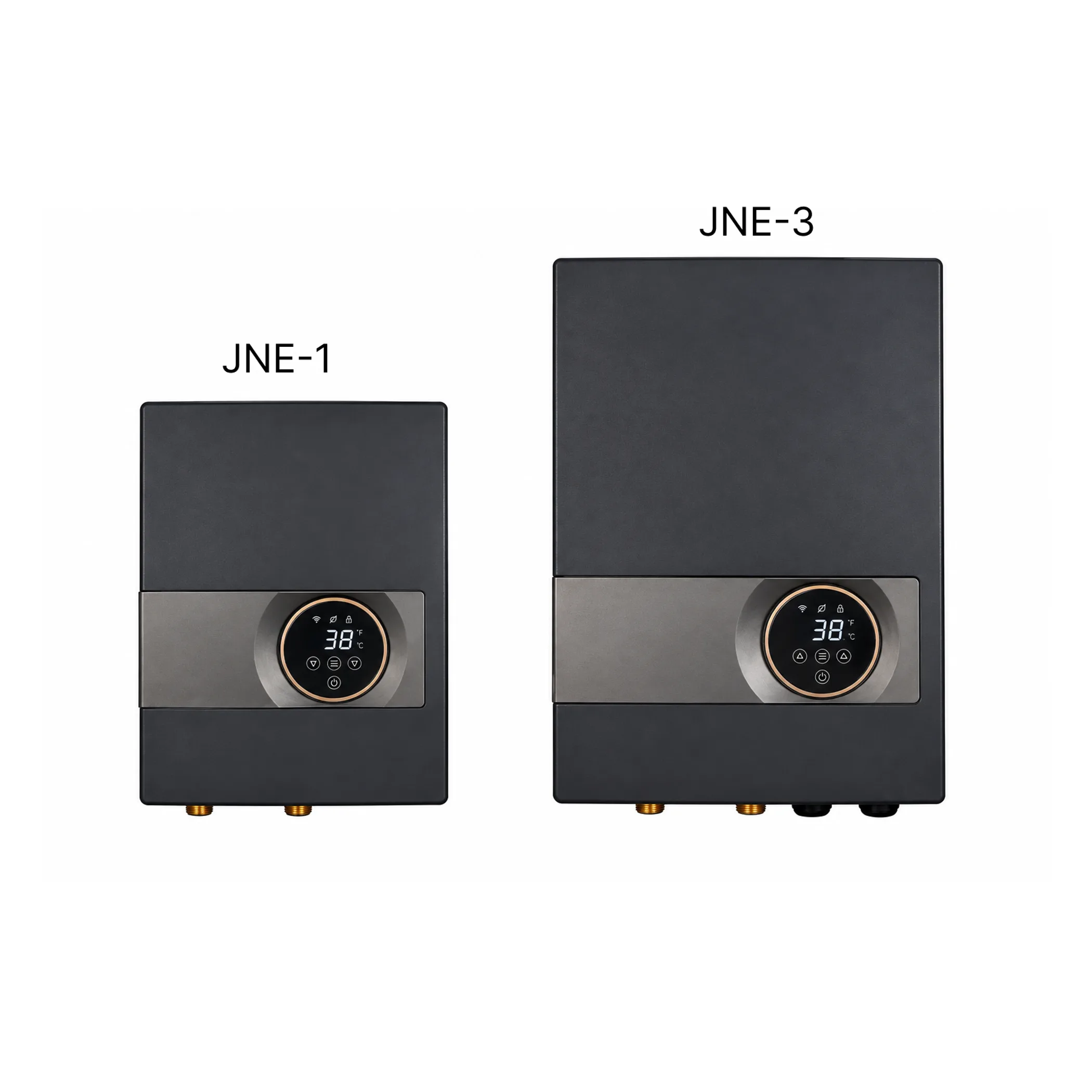
JNE-1 is the single-phase version of JNE. The same heater and the same display as JNE-3, but it runs on one phase instead of three.
It delivers hot water after around five seconds and uses electricity only while the water is running, so you avoid a tank that keeps water hot that you are not using. The temperature stays within one degree of what you have set, even when the pressure fluctuates.
You control it from the touchscreen on the front or from your phone with the Tuya app. The display shows the inlet and outlet temperature, how much water you are using and how much electricity it is taking.
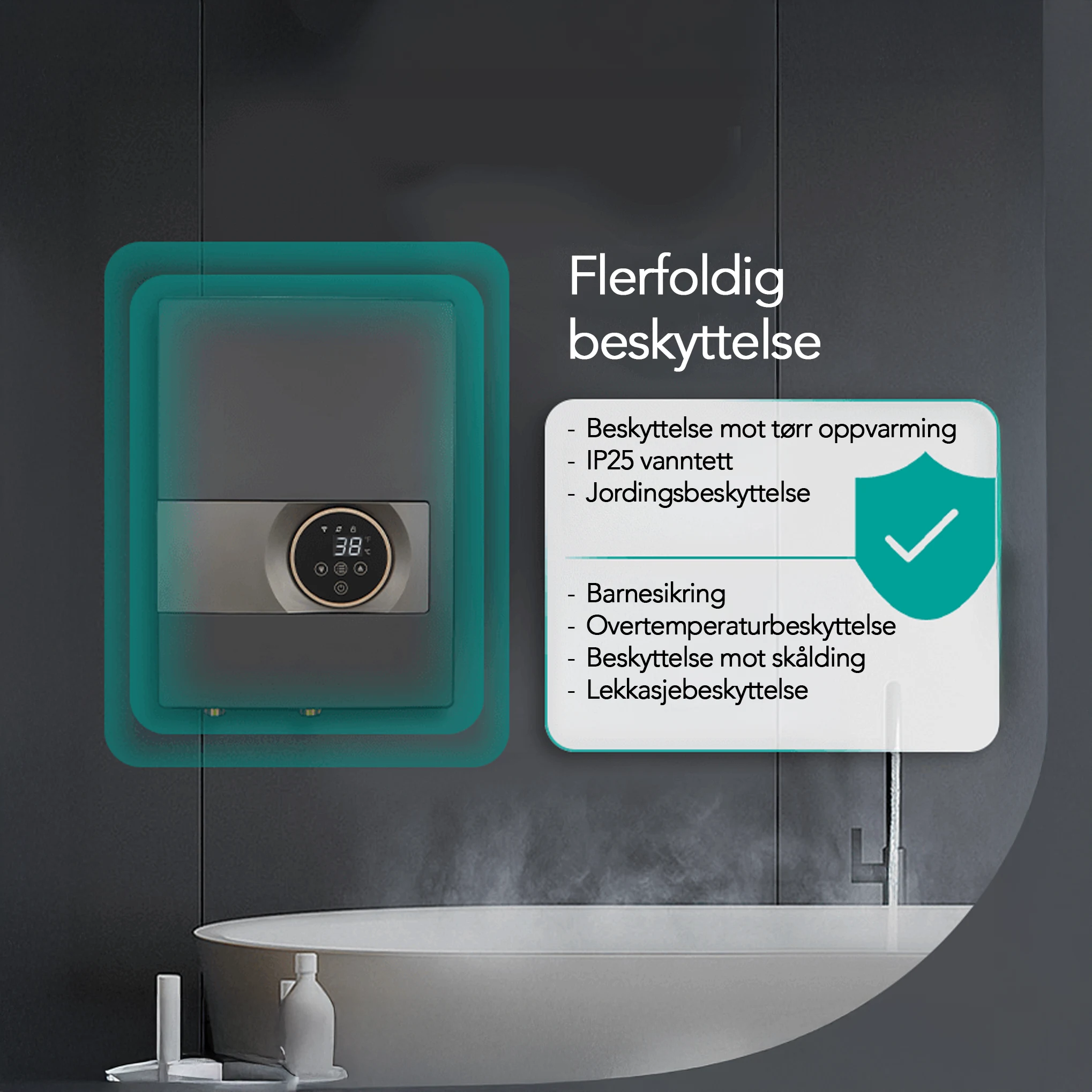
Inside, water and electricity are physically separated. The heating element is cast aluminium in a multi-layer heating chamber that counteracts limescale, and the heater has overheating protection, overpressure protection, anti-scalding, leak protection and IP25.
JNE-1 is supplied from 7 to 13,5 kW and is made for one hot water outlet at a time, typically the shower. If several outlets are to run at the same time, JNE-3 is the right model.
Features
- Hot water after around five seconds, and it does not run out
- Holds the temperature within one degree of what you set
- Four power output levels from 7 to 13,5 kW
- Water and electricity physically separated, IP25 and safe in wet rooms
- Touchscreen, and control from your phone with the Tuya app
Installation
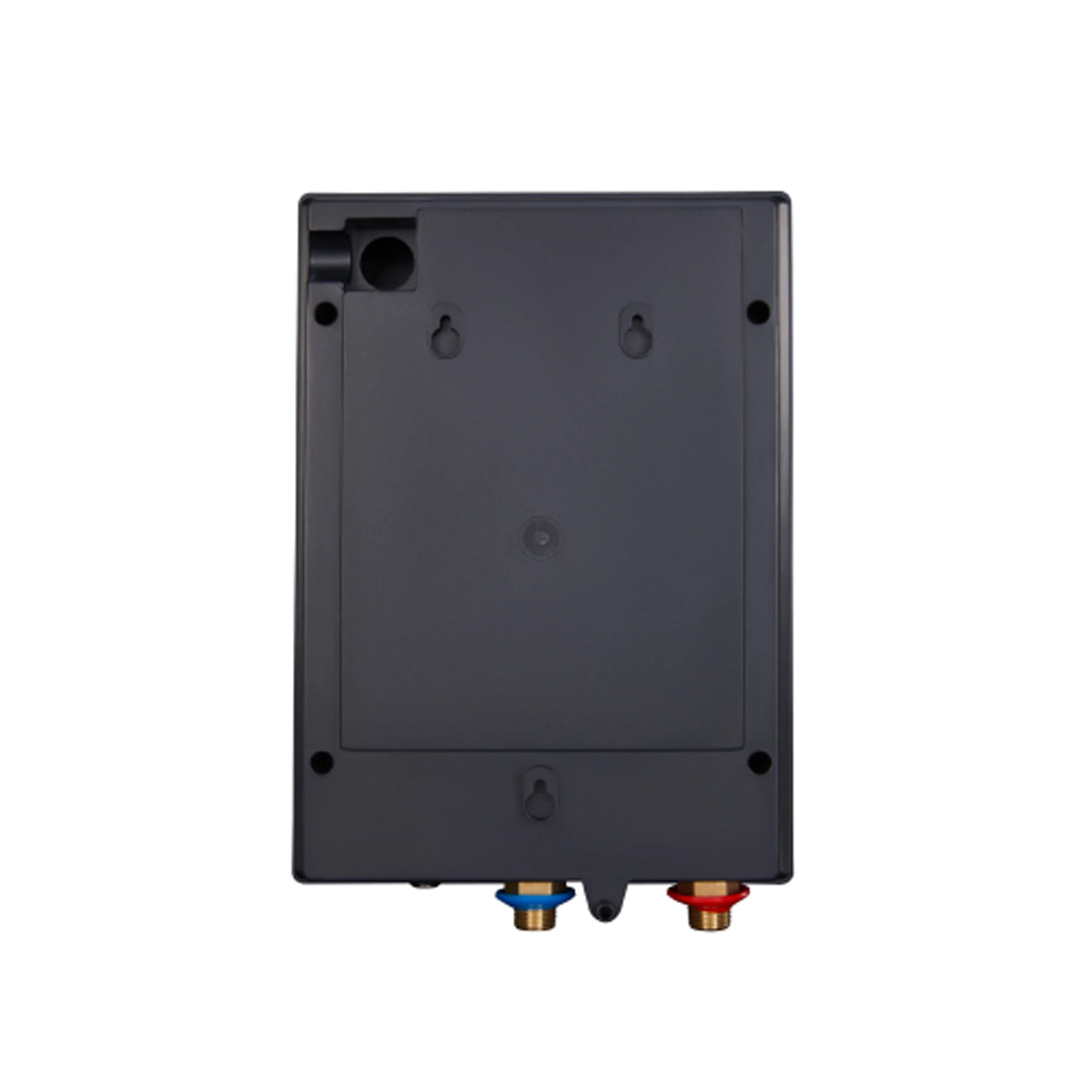
JNE-1 is hung on the wall and connected to the existing cold water pipe with a standard G1/2” connection. The unit runs on single-phase 230 V, and the electrical installation must be carried out by an authorised electrician. Note that the current is high when everything has to go through one phase: JNE70 draws 30,4 A and requires a 32 A circuit, while JNE150 draws 58,7 A and requires 63 A. So check what your installation can handle before you choose a power output. If you need a lot of hot water and have three phases available, JNE-3 distributes the same load across three phases instead, and draws far less per phase. Once the heater is mounted and the water connected, open the tap to bleed out air before start-up. The temperature is set on the touchscreen or in the Tuya app. The heater detects faults itself and shows them on the display.


